How to tell satire from fake news in under a minute
Satire wants you to get the joke. Disinformation needs you to miss it. Here is how to check which one you are reading.
Every week someone shares a satire headline as real news, and every week someone shares a real headline thinking it must be satire. Both mistakes are understandable. Political news has become strange enough that the line between a joke and a report is often one adjective wide.
The good news is that satire and disinformation behave differently, and the difference shows up quickly if you know where to look.
Start with intent
Satire is built to be found out. The writer wants you to notice the exaggeration, because noticing it is the joke. A satire piece about a senator who turns into a werewolf is not trying to convince anyone that werewolves vote. It is commenting on how campaigns explain away a loss.
Disinformation works the other way. It is designed to survive a quick read and to look plausible to someone who already wants to believe it. Its writers hide the seams.
The sixty-second check
- Look at the publication, not the headline. Satire sites say what they are on an About page, in a footer or in a disclaimer. If you cannot find any of those, be careful.
- Read the third paragraph. Satire escalates. By the third paragraph the premise usually becomes impossible on purpose. Disinformation stays flat and calm so it can be screenshotted.
- Check the quotes. Satire often invents spokespeople with names like “Vinnie.” Disinformation attaches invented quotes to real officials and gives them exact dates.
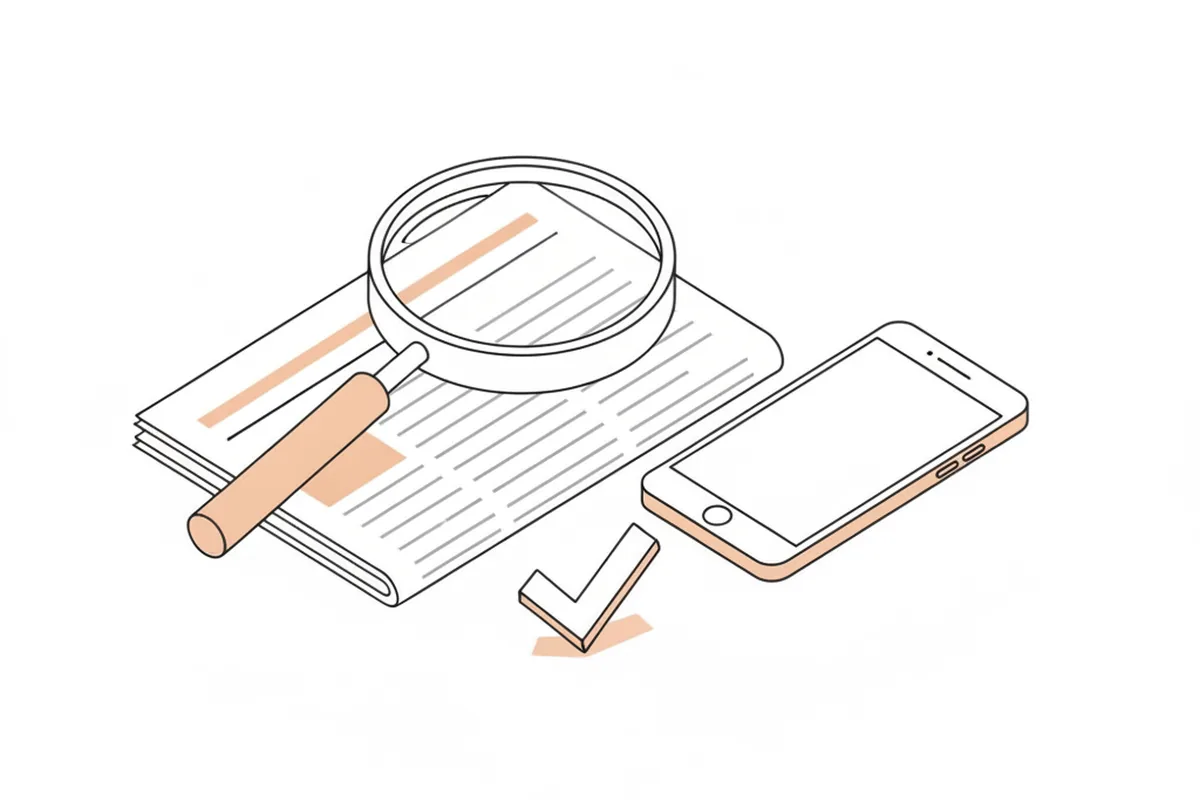
- Search the claim. A real event of national importance will be covered by more than one outlet within an hour.
Why screenshots are the problem
Most confusion starts when a headline is separated from the site it came from. A screenshot removes the masthead, the disclaimer and the tone of the surrounding page. At that point a joke is just a sentence, and sentences can be repurposed.
If you share satire, share the link, not the picture. It keeps the joke attached to its label.
When it is genuinely hard to tell
Sometimes real events are absurd. In those cases, slow down. A small delay costs nothing, and the people who get fooled most often are the ones who share first. The best satire rewards the reader who pauses, and so does reality.