The Wall Street Journal now blocks every bot unless it is on a list
Dow Jones set robots.txt on WSJ, Barron's and MarketWatch to block every bot not on an allowlist. Who else does it and what it means for publishers.

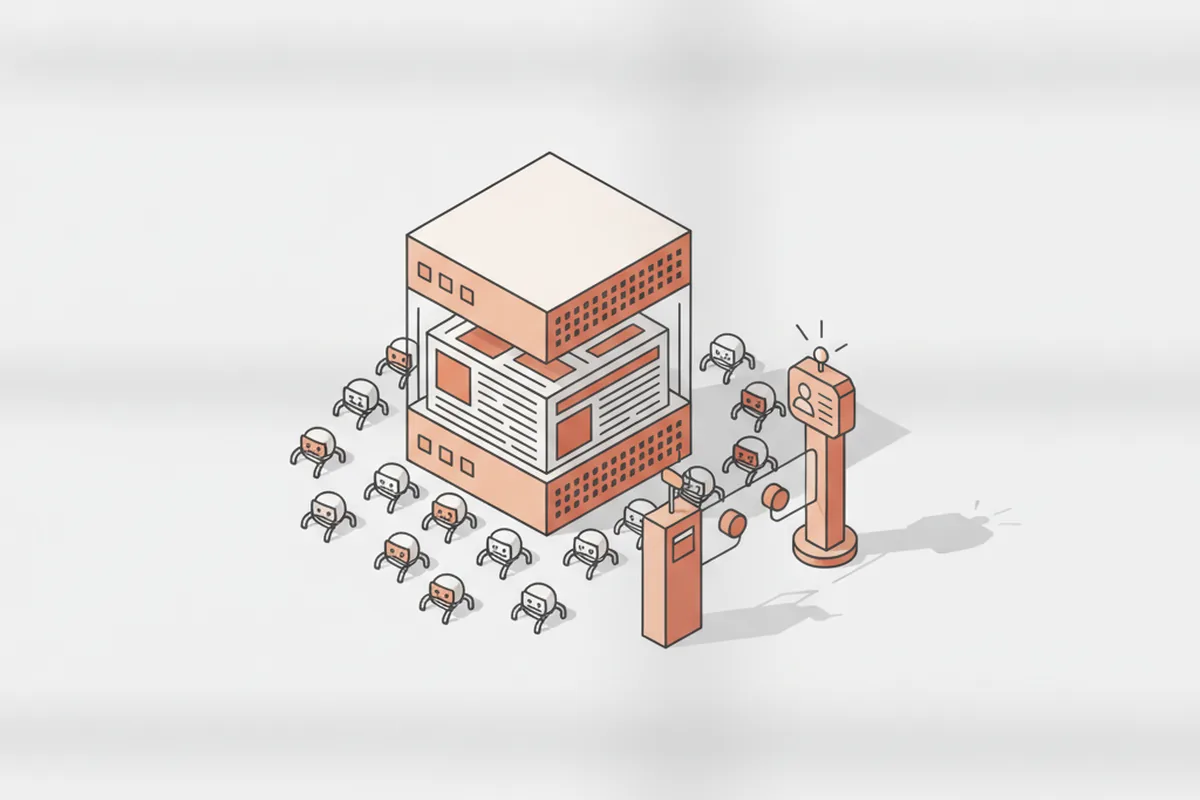
The robots.txt file on wsj.com now opens with two lines that shut the door on everyone: User-agent: * and Disallow: /. Dow Jones made that switch in May for The Wall Street Journal, Barron's and MarketWatch, Nieman Lab reported on November 24. Any crawler not named further down the file is told to stay out.
We checked the live files on November 25. The wsj.com file names 63 user agents. The Barron's and MarketWatch files each name 79. Search crawlers such as Googlebot and Bingbot are on the list, along with ad-verification tools. Of the AI bots, only OpenAI's three made it: GPTBot, OAI-SearchBot and ChatGPT-User. News Corp, which owns Dow Jones, has a licensing deal with OpenAI worth more than $250 million.
Robots.txt is only a request. Google's own robots.txt documentation says the file cannot force a crawler to obey it. So a publisher that wants an allowlist to hold has to enforce it on the server, the CDN or the firewall. That is the layer smaller outlets tend to hand to cloud migration and management services when they move off shared hosting.
What did Dow Jones change, and why?
Dow Jones switched from a blocklist to an allowlist. Before, it named bots it did not want and let everything else in. Now everything is blocked unless the company has added it to the list. Nolly Evans, Dow Jones's chief development officer, told Nieman Lab the change followed a shift in what bots do:
"As bot traffic has shifted from discovery-oriented use cases toward systems that can ingest, summarize, or otherwise benefit from our content without a relationship in place, we have moved to a more deliberate signal."
The allowlist matches that logic: search engines that send readers, ad tools tied to revenue and one AI company with a signed contract.
Which other publishers block bots by default?
The approach is still rare. Nieman Lab reviewed 1,000 leading English-language publisher sites and found that about 2% disallow all bots by default. That group includes:
- Reuters and Bloomberg Law
- The Register
- Other News Corp titles: The Times, The Australian and The Sun
Most publishers still block bots one by one. News Corp chief executive Robert Thomson summed up the reasoning: "The principled companies want to have an agreement, and the unprincipled companies don't." The same fight over paid access is behind deals like Le Figaro's agreement with OpenAI and the SPUR coalition's work on AI usage rules.
How do publishers enforce a robots.txt allowlist?
Publishers use the file as a written record, then check their server logs against it. Slate updates its robots.txt every week using an API from Known Agents, a service that tracks more than 2,000 AI-related bots. Greg Lavallee, Slate's vice president of technology, told Nieman Lab: "It's very easy for us to take that robots.txt list and go look at the server logs and say, 'We told you not to access and then you did.'"
Others go further and block at the network edge. People Inc., the publisher formerly known as Dotdash Meredith, hard-blocks crawlers and has raised the number of blocked bots from about 2,000 to more than 30,000, according to the same report.
What does this mean for a small newsletter or news site?
An allowlist only makes sense if you know which bots bring you readers. For a small outlet, three checks come before any rule change:
- Find out where readers come from. If search and social referrals matter, keep Googlebot, Bingbot and link-preview bots on the list, or your stories will stop showing up in search results and shared links.
- Compare robots.txt with your logs. A bot that requests pages you disallowed is ignoring the file. Rate limiting or a firewall rule is the next step for that bot.
- Decide what each AI crawler is for. OpenAI publishes separate user agents for training, search and user-initiated browsing. Blocking one does not block the others.
A bill now in the Senate would also make burdensome bots say who runs them. We covered it in our report on the Stealth Bot Prohibition Act. Until a law like that passes, the robots.txt file and the server logs are the tools a publisher actually controls.
Sources for this report
- Nieman Lab: The Wall Street Journal joins a growing list of publishers disallowing bots by default (Nov. 24, 2026)
- The Wall Street Journal: robots.txt (checked Nov. 25, 2026)
- Barron's: robots.txt (checked Nov. 25, 2026)
- MarketWatch: robots.txt (checked Nov. 25, 2026)
- Google Search Central: Introduction to robots.txt