McClatchy rebuilds its newspaper chain around AI after cutting newsrooms
McClatchy cut 90+ journalists and is betting on an AI content lab. What it built, what readers saw, and what small publishers can learn from it.
McClatchy, the 169-year-old chain behind the Sacramento Bee, the Kansas City Star and the Miami Herald, is rebuilding itself around artificial intelligence. Nieman Lab reported on November 18 that the company now plans to "agentify the entire enterprise," two months after it laid off more than 90 journalists.
The layoffs and the AI push were first reported in September. The California Post, syndicated by Yahoo Finance, described cuts at the Fresno, Sacramento and Modesto papers alongside new editor jobs in an AI unit called the Content Innovation Lab. Nieman Lab's new report adds the plan behind those moves.
For anyone who runs a publication, the story is a useful case study in what AI in a newsroom actually looks like once it ships. Most of what McClatchy describes is ordinary product work: a chatbot wired into the CMS, detection tools, new websites. That is the kind of build a generative ai development company is usually hired for. The open question is whether readers want the result.
What is McClatchy building?
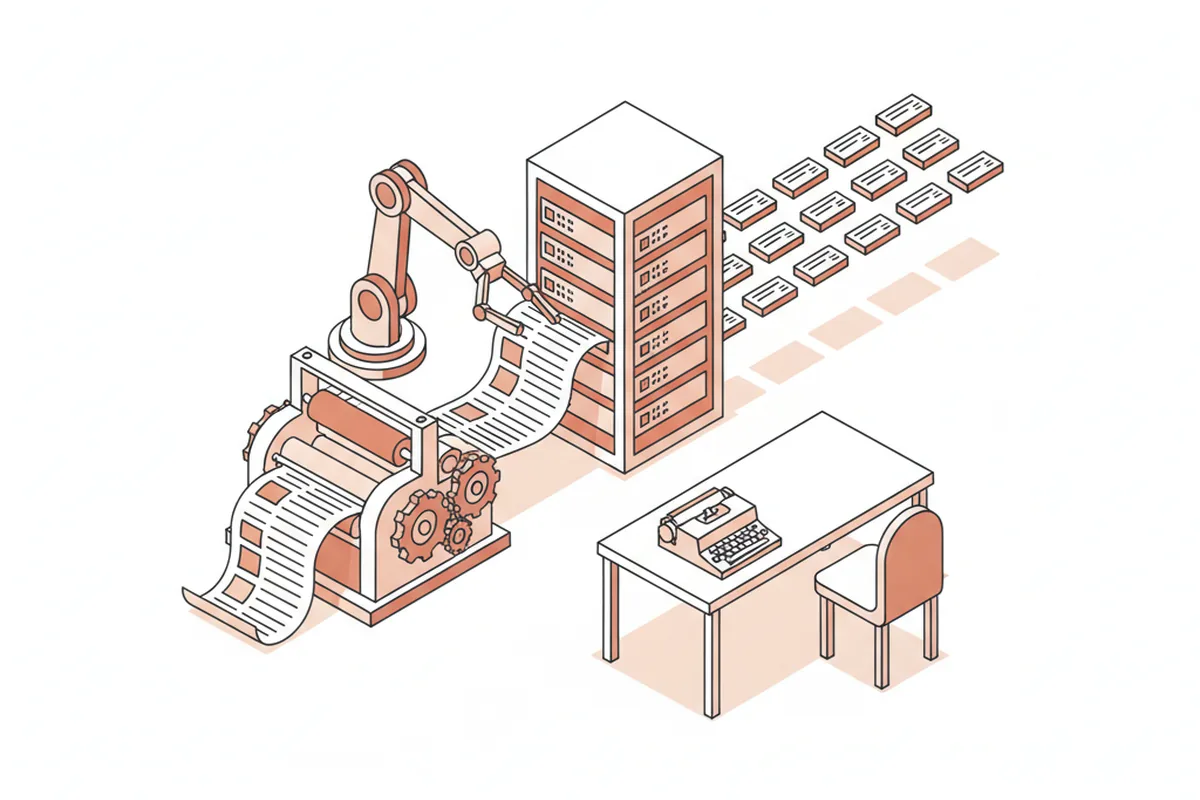
McClatchy is building tools to produce more articles with fewer reporters. According to both reports, the center of the plan is a "content scaling agent," a chatbot that takes stories written by staff reporters and repackages them at different lengths for different audiences, keeping the reporters' bylines.
Nieman Lab lists the rest of the stack:
- The Content Innovation Lab, led by Patrick Stiegman, a former ESPN digital executive. It has launched four lifestyle websites: Crime Hunter, Saltwater South, Camp & Country and Student Section.
- Trend Hunter, an AI trend-spotting platform McClatchy acquired in 2024.
- AI-powered video, a separate strategy led by Ariel Storch.
CEO Tony Hunter has framed the change as unavoidable. "We cannot continue to do the same things because the marketplace has changed," he said, as quoted by Nieman Lab.
How much of McClatchy's output is AI-written?
As much as 20% of recent McClatchy articles were likely AI-generated, according to data from the detection company Originality.ai cited by Nieman Lab. Treat that figure with care. AI detectors give probabilities, not proof, and their accuracy is disputed. Still, it is the only outside estimate available, and the company has not published its own.
The business pressure is real. Nieman Lab reports that McClatchy's paid digital subscribers fell 17% last year and unique visitors dropped 39%, the same traffic slump many outlets blame on search changes and AI answers.
How have journalists and readers reacted?
The response has been mostly hostile. A Kansas City Star reporter called the new lab roles "AI content farm jobs," according to the California Post. The Washington State NewsGuild staged a byline strike in May to demand "ethical limits" on AI use, Nieman Lab reports.
Audiences tend to agree with the union. The Reuters Institute Digital News Report has found year after year that readers are uncomfortable with news made mostly by AI and more relaxed about AI used behind the scenes. Repackaging a reporter's story under the reporter's byline sits right on that line.
What can small publishers learn from this?
Independent newsletters are not going to build a content scaling agent. But the same questions apply at any size:
- Label it. If a tool drafted, summarized or rewrote a piece, say so near the byline. Readers forgive tools faster than they forgive surprises. Our editorial standards show one way to write that down.
- Keep humans on facts. Use AI where errors are cheap (headlines to test, transcripts, tagging), not where they are expensive. Our guide to AI fact-checking tools for journalists covers where automation helps and where it fails.
- Measure trust, not just volume. More articles mean little if open rates and renewals fall. Track both before and after any AI change.
- Own your stack. Tools bolted onto a hosted platform are hard to audit. If AI becomes central, know what you control. See how to choose a paid newsletter platform.
For readers, the advice stays simple: check who wrote what, and go to the original reporting. That habit is also how you tell satire from fake news.
Sources for this report
- Nieman Lab: After gutting newsrooms, McClatchy plans to rebuild itself around AI (Nov. 18, 2026)
- California Post via Yahoo Finance: California newsroom replaces dozens of laid-off reporters with AI writers (Sept. 19, 2026)
- Reuters Institute: Digital News Report